Sunscreen on the bolster. Denim dye on the armrest. A splash of cold brew across that soft, matte Alcantara. EV cabins look sleek on day one, yet their synthetic surfaces need different care than traditional hides or woven fabrics.
This guide focuses on two materials showing up across electric models: polyurethane based vegan leather and Alcantara microfiber. You will find practical, product specific methods, clear do and do not lists, and routines that fit real life. The goal is simple - keep the original color, texture, and low gloss finish for years, not months.
Material basics that drive care choices
Vegan leather in EVs is usually a polyurethane top layer over a microfiber backing. It resists spills better than open pore leather, but it can swell or turn tacky if hit with strong solvents. It prefers pH neutral, water based products and light agitation.
Alcantara is a dense, non woven microfiber from Alcantara S.p.A., often described as a synthetic suede. It is breathable and grippy, which also means it can trap oils and fine dust. Liquids should be blotted, then lifted with foam or a minimal moisture method to avoid tide marks.
One size fits all cleaners cause trouble here. A vinyl dressing may gloss up a steering wheel. A leather conditioner can clog vegan leather and attract dust. Know the substrate, then choose the chemistry.
Daily habits that prevent damage in high use zones
Prevention beats scrubbing. Most visible wear shows on seat bolsters, the steering wheel rim, center armrests, and door pulls. Small, repeatable habits reduce buildup and keep microfibers standing tall.
- Carry a soft 300 gsm microfiber towel in the door bin. Quick wipe body oils within 2 minutes after a gym run or sunscreen application.
- Rotate dark denim or untreated leather belts away from light vegan leather seats on longer drives. Transfer typically starts within the first 30 to 60 minutes.
- Use a sunshade under panoramic glass. Cabin plastics can hit 60 C on bright days, and heat accelerates print through and plasticizer migration.
- Keep pens, cosmetics, and sanitizer bottles capped. Gel ink and avobenzone based sunscreen leave stubborn marks if they bake in.
None of this takes long. It saves the original matte look, which is harder to restore than to maintain.
Safe cleaning methods with exact mixes and times
Vegan leather - quick clean and deeper refresh
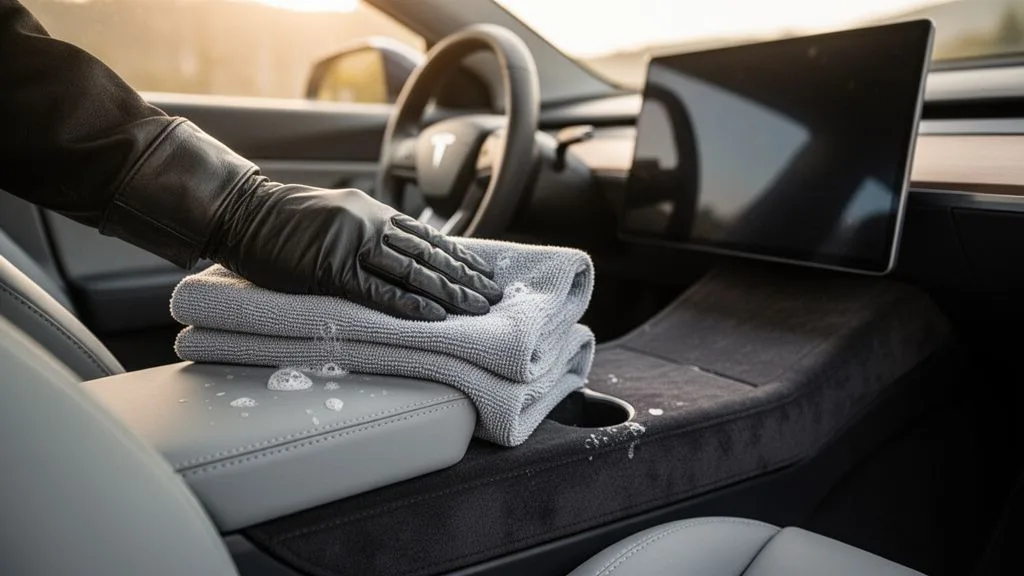
For routine soil, use a pH neutral interior cleaner diluted 1:10 with distilled water. Spray into a brush, not directly on the panel, to avoid pooling at seams. Agitate with a soft bristle brush for 20 to 30 seconds, then wipe dry with a microfiber towel. Follow with a second dry towel to remove any surfactant film.
For dye transfer, step up to a dedicated vinyl or coated leather cleaner. Work in small sections - think 10 cm squares. If needed, spot treat with 70 percent isopropyl alcohol on a swab for up to 10 seconds, then neutralize with your pH neutral cleaner and dry thoroughly. Do not use acetone or lacquer thinner. They can haze polyurethane within seconds.
Alcantara - low moisture, high patience
Vacuum first using a soft brush attachment to lift dust without dragging grit. For fresh spills, blot with an absorbent towel. No rubbing yet. Next, apply a foam specific cleaner for Alcantara or make a mild solution - one drop of fragrance free dish soap in 300 ml of distilled water. Whip into foam in a bowl, then pick up foam with a soft brush.
Work in overlapping circles for 60 to 90 seconds, barely dampening the surface. Blot with a clean towel. Allow to air dry, then gently lift the pile with a dry suede brush. For oily spots, a citrus free APC at 1:20 can help, but test first. Too wet is worse than too gentle here.
Protection products that actually suit synthetics
Not every dressing or conditioner belongs on vegan leather or Alcantara. Choose low gloss, water based options designed for coated leather and vinyl, and fabric specific protection for microfibers. The goal is repellency and UV resistance without shine or residue.
- For vegan leather: a modern coating like Gyeon Q2 LeatherShield or Nanolex Si3D Leather and Vinyl forms a thin, breathable barrier. Expect a subtle change in hand feel for the first week. Let it cure 12 to 24 hours before heavy use.
- For high touch vinyl trim: Colourlock Vinyl Protector leaves a satin finish and UV inhibitors. Apply two light coats rather than one heavy layer.
- For Alcantara: a fabric protector such as Scotchgard Auto Fabric and Carpet Protector, misted lightly from 30 cm, can reduce wicking. Two thin passes with 10 minutes between coats perform better than one wet pass.
Trade off alert: hydrophobic treatments can slightly stiffen Alcantara until the first few drives, and vegan leather coatings may mute that soft grip by about 5 to 10 percent. The payoff is easier cleaning and notably less dye transfer. Skip solvent heavy, silicone rich gloss dressings. They can smear and attract dust.
Stain scenarios and fixes that avoid collateral damage
Denim dye on light vegan leather: pre warm the area slightly by running the cabin heater for 3 minutes. Apply a coated leather cleaner to a melamine foam pad, squeeze out excess, and glide with light pressure for 10 to 15 passes. Wipe and inspect under cool white light. Seal after the surface is fully dry.
Coffee on Alcantara: blot immediately. Apply foam as described earlier, then use short, gentle strokes from the outside toward the center to avoid rings. If a faint edge remains, lightly mist distilled water and blend the perimeter. Dry with the door open for airflow.
Sunscreen with avobenzone or octocrylene on vegan leather: mix 1 ml of mild, dye free dish soap in 200 ml warm distilled water. Work the spot with a microfiber applicator for 60 seconds, rinse with a damp cloth, then dry. If a halo appears, add a tiny amount of 70 percent IPA to the applicator on a second pass and neutralize immediately.
Environmental stress in EVs - heat, UV, and ozone
Panoramic glass and quiet cabins invite sunlight. UV and heat are the real villains. At a UV index of 7 or more, a dark interior can see 50 to 60 C surface temperatures in under an hour. Polyurethane softens and prints under pressure at those temps.
Practical steps: use a reflective windshield shade, and consider a quality ceramic window film at 50 percent VLT that blocks infrared heat. Park with the steering wheel turned 90 degrees on hot days to vary wear points. Avoid ozone shock treatments above 0.05 ppm. Ozone can oxidize coatings and fade dyes quickly.
Battery preconditioning warms the cabin too. If you preheat regularly in winter, crack a window slightly to vent moisture so Alcantara does not stay damp.
Maintenance intervals that keep finishes consistent
Short, regular sessions beat big rescues. This cadence protects texture and color while saving time.
- Weekly: quick wipe vegan leather touch points with a damp microfiber. Light brush over Alcantara to lift the nap. Time cost - 5 minutes.
- Monthly: full interior vacuum, pH neutral clean on vegan leather, foam clean Alcantara zones you actually touch. Re brush fibers after drying.
- Every 6 months: refresh protectants. One coat is fine for low use cars, two for daily drivers. Plan 30 minutes plus curing time.
- Annually: inspect stitching, seams, and high friction edges. Address any gloss patches early with a deeper clean before sealing.
Set a reminder in your EV app calendar. Small habit, big payoff.
FAQ - specific care questions, clear answers
Can you use traditional leather conditioner on vegan leather?
No. Traditional conditioners target animal hide fibers and often contain oils or waxes that can sit on top of polyurethane, creating shine and tack. Use a coated leather or vinyl specific protectant like Gyeon Q2 LeatherShield or Colourlock Vinyl Protector.
Is steam cleaning safe for Alcantara?
Light, low pressure steam can work for sanitizing, but it can also collapse the pile and leave water marks if overdone. Keep the nozzle 5 to 8 cm away, move continuously, and finish with a dry microfiber and a suede brush. For routine care, foam methods are gentler.
How do you remove pet hair from Alcantara quickly?
Use a rubber pet hair brush or a nitrile glove, sweeping in one direction to gather clumps, then vacuum. Skip aggressive lint rollers. They can fuzz the surface.
Are disinfectant wipes safe on steering wheels?
Chlorine or quaternary ammonium compounds like benzalkonium chloride can haze coatings and shift dye. For disinfection, 70 percent IPA on a cloth for 30 seconds, then neutralize with a pH neutral cleaner and dry. Do not leave alcohol to evaporate on its own.
A short closing note on feel versus durability
Perfect softness is nice. Consistent texture and color are better over time. Choose a matte, water based protectant, accept a tiny change in hand, and you will clean less and worry less. Before big trips, add one layer the night before and let it cure. The next morning, coffee splashes bead and wipe away in seconds.