
Heat waves push lithium ion batteries into their least comfortable zone. High ambient temperature plus high state of charge speeds unwanted side reactions, reduces fast charge power, and can chip away at capacity over time. Small routine changes - not heroics - keep the pack cooler and happier.
This guide condenses hot-weather tactics into charging limits, schedules, parking choices, and brand-specific settings you can set once and use all summer. Expect concrete numbers, named features, and a few trade‑offs so decisions are simple on a 95 F day.
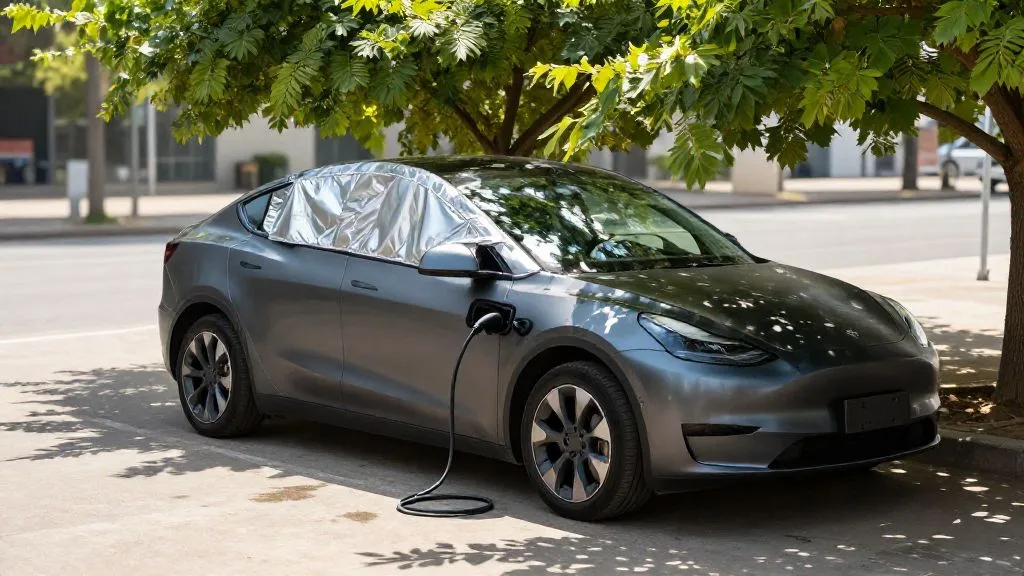
Charging limits and schedules that protect lithium ion cells in heat
High heat and high state of charge are a rough combination. Cell aging reactions climb quickly as pack temperature moves past 40 C, especially if the pack sits near full. Reduce exposure by capping daily charge and timing sessions to finish near departure.
- Set a daily cap between 60 and 80 percent. Use 80 percent when a buffer helps, 60 to 70 percent for short commutes.
- Finish charging 30 to 60 minutes before you leave. Scheduling off-peak charging to end just before 6 to 7 a.m. avoids a full, warm pack sitting for hours.
- Keep a floor near 20 percent during extreme heat. Parking near empty for days is harder on cells and limits thermal management options.
- Lower the charge rate on hot afternoons. Dropping Level 2 from 48 A to 24 to 32 A reduces resistive heat in both the pack and wiring.
Expect a trade‑off: slower charging takes longer. The upside is cooler cells, less taper the next morning, and steadier capacity over the long term. Off-peak schedules can also trim your bill by several cents per kWh.
Parking tactics that cut thermal load on traction batteries
Where the car sits matters. Solar gain can push cabin temperatures to 120 to 140 F in 30 minutes at 95 F ambient. Pack casings heat more slowly but still rise, forcing the thermal system to work harder and draw energy from the battery if unplugged.
- Choose shade first, even if it means a longer walk. A tree canopy or the north side of a building can drop cabin temperature by 10 to 20 F.
- Use a garage whenever possible. Even a vented single-bay garage buffers peak heat and limits direct sun on the battery enclosure.
- Deploy a reflective windshield shade and crack windows slightly if safe. Lower cabin heat eases shared coolant loop demand in many vehicles.
- Avoid leaving the car above 90 percent in direct sun for hours. High SoC plus high temperature amplifies aging in graphite anodes and high nickel cathodes.
Cabin overheat protection helps but consumes energy. Plug in while it runs so grid power, not the pack, handles the cooling. Unplugged, expect a few hundred watts of draw that can add up over a long afternoon.
DC fast charging on 100 F days: arrival SoC, site choice, and stop length
Fast charging generates heat in the cells and busbars. On a 100 F day the margin shrinks, so strategy matters more. Arrive with lower SoC, favor shade, and end the session earlier to avoid thermal limits that slash power.
- Target 10 to 30 percent arrival. Lower SoC gives the car more cooling headroom and allows a strong initial ramp without immediate throttling.
- Prefer shaded sites or canopies. Some Electrify America and EVgo locations provide partial shade that helps hold pack temps down.
- Watch pack temperature if displayed. Near 45 C, many cars reduce power. Consider stopping around 70 to 80 percent and adding a short top‑up later.
- Avoid back‑to‑back DC sessions. If necessary, take a 15 to 20 minute airflow break to let temperatures fall before the next stop.
Counterintuitive but useful: a 100 kW charger can yield a faster trip in extreme heat than a 250 kW unit if your car thermally throttles on the higher power post. Average speed wins, not peak kW.
Brand-specific settings for Tesla, Leaf, Ioniq 5, EV6, and Bolt EUV
Tesla models
Set a daily limit of 70 to 80 percent in the app and use Scheduled Departure so charging finishes near your leave time. Enable Cabin Overheat Protection on while plugged in. For DC fast charging, navigate to the station to precondition automatically so the pack reaches the right temperature without lingering at extremes.
Nissan Leaf
Leaf models rely on passive air cooling. In high heat, prioritize overnight Level 2 and avoid multiple CHAdeMO sessions in a day. If a fast charge is required, a 50 kW station is often kinder than a higher power unit and can produce better average speed across the day by avoiding severe throttling.
Hyundai Ioniq 5 and Kia EV6
These E-GMP cars handle heat well but still benefit from limits. Use the charge cap, schedule off-peak sessions, and enable battery conditioning via navigation before DC stops. On 120 to 235 kW chargers, consider ending near 80 percent during heat waves to skip high-SoC taper and extra heat.
Chevrolet Bolt EV and EUV
Set a 70 to 80 percent target for daily use and charge overnight on Level 2. Typical DC rates cluster around 55 kW; avoid consecutive fast charges above 100 F ambient to prevent thermal saturation that slows the next session dramatically. Use the myChevrolet app to schedule and pre-cool while plugged in.
Hot-weather thresholds for pack temperature, SoC, and storage
Expect cabin temperature to reach 130 F under glass within 30 minutes at 95 F ambient. Battery thermal systems often aim to keep cells in the 15 to 35 C band for longevity. Above about 40 C, aging reactions accelerate, and some vehicles begin to clamp charge power aggressively.
For parking longer than 24 hours in heat, store between 40 and 70 percent. If cabin overheat protection stays active while unplugged, keep charge above 20 percent to avoid stranding. For trip days, charge to 100 percent only when necessary and finish within 30 to 60 minutes of departure.
Tools and apps that automate cooler charging
Smart chargers and vehicle apps remove guesswork. They schedule overnight sessions, cap amperage, and precondition the cabin while the cord is connected. A small tool set makes a large difference on the hottest weeks.
- Wallbox Pulsar Plus and ChargePoint Home Flex schedule after midnight and can limit current from 16 to 48 A. The ChargePoint unit often retails around 549 USD.
- Tesla, Hyundai Bluelink, and myChevrolet apps set departure times and climate preconditioning. Pre-cool while plugged in so both cabin and battery start cooler.
- A simple digital thermometer in the garage confirms whether indoor parking is meaningfully cooler. If the garage reads 10 F below outside, park inside during heat waves.
One caution: do not use generic smart plugs with Level 1 EVSE unless the plug is rated for continuous 12 A loads. Thermal safety comes first. Also remember that preconditioning draws energy, so plug in or plan a slightly higher morning SoC.
Frequently asked questions about EV charging in heat
Should you leave an EV plugged in during a heat wave?
Yes. Plugging in lets the car run thermal management and any cabin overheat protection without draining the pack. Set a conservative cap, typically 70 to 80 percent, to avoid repeated top‑offs to 100 percent while hot.
Is parking at 100 percent state of charge harmful in high heat?
It increases stress. If full charge is required for a trip, time the session to finish 30 to 60 minutes before departure. Otherwise, store between 40 and 70 percent during heat waves.
Can you fast charge safely above 100 F ambient?
Yes, with a plan. Arrive near 20 to 30 percent, prefer shaded sites, and consider stopping between 70 and 80 percent. Watch for taper due to temperature or high SoC and plan an extra short stop later rather than forcing one long, hot session.
Do window tints or ceramic windshield films help battery health?
Indirectly. High-quality films reduce cabin heat load by several degrees, often 5 to 10 F, which lowers shared thermal loop demand. A reflective windshield shade offers a similar benefit at a low cost.
A simple daily routine for EV battery longevity in heat
Set a firm 70 percent daily cap, schedule charging to end before you roll out, and park in shade or a cooler garage whenever possible. On road days, arrive at DC fast chargers near 20 to 30 percent and wrap up around 80 percent to sidestep heat-driven taper. These moves cost little, fit normal life, and keep the pack in its preferred temperature and SoC window all summer.