
Automatic wash tunnels can leave a thin film on ultrasonic pucks and a hazy layer on the front radar cover. The result is annoying proximity beeps, AEB or cruise warnings, and occasional park assist dropouts. Cloth drums and hand pre-scrubs also bump the charge door. A light tap can unlatch or strain the hinge if software is not guarding it.
You can keep sensors clear and the port sealed without tape or prying. The plan is simple: set the car to ignore outside touches, pick a wash type that does not load the sensor windows with silicones, hold safe pressure and distance, then do a 2 minute wipe of the pucks and radar cover. It works on a Tesla Model 3, a Rivian R1T, a Ford F-150 Lightning, and everything in between.
How wash chemicals and pressure affect 77 GHz radar and 40 kHz ultrasonics
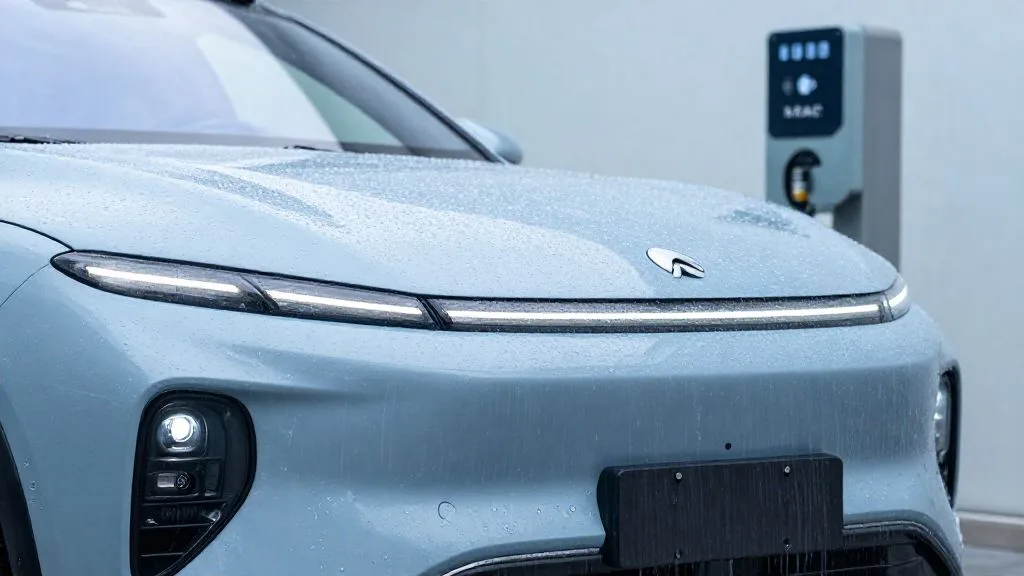
Front radar modules operate near 77 GHz behind a plastic cover or emblem. Thin hydrophobic films and silicone drying aids change the surface dielectric and scatter energy. Even a spotless looking emblem can lose a bit of clarity if coated in gloss boosters. Ultrasonic park sensors around 40 kHz are less picky about chemistry, but water beads and wax rings around the bezel trigger ghost echoes.
Pressure matters as much as chemistry. A touchless bay often runs 1,500 to 2,000 psi. At close range a focused jet flexes bumper skins and drives water past trim edges. Keep 30 to 45 cm of standoff around pucks, emblems, and fascia seams, and use a wide 40 degree fan where possible.
- Spray wax and ceramic toppers bead on the puck face and trap rings of water that cause near object alerts until dry.
- Soft cloth drums move grit across polycarbonate radar covers and create micro-scratches that diffuse signal.
- Underbody or wheel blasters push mist into bumper vents that can take hours to evaporate.
Many components are tested to ISO 20653 IP6K9K with 80 to 100 bar jets, but that spec applies to the module, not your whole bumper assembly. After a minor repair, PPF install, or emblem swap, seams may not shed water the same way. Treat every sensor edge like a vent - not a target - for high pressure spray.
Configure the EV so the charge port stays latched in the tunnel
Let software lock out the door actuator. Do not tape, wedge, or force the flap. Modern ports are strong enough to latch at speed, but not designed to fight a cloth drum or a hand tug.
- Enable the vehicle's wash mode before the queue. On Tesla: Controls > Service > Car Wash Mode. On Rivian R1T/R1S: Vehicle > Service > Car Wash Mode. Fold mirrors and disable wipers on any brand.
- Close the port in the app, then lock the car. Keep the phone key or fob at least 3 meters away so approach unlock does not wake actuators.
- Prevent accidental shifts. Use the maker's transport or neutral hold. Ford F-150 Lightning supports Neutral Hold; Hyundai Ioniq 5 supports Neutral for car wash via the shifter menu.
- Ask attendants to skip hand pre-scrubs near the charge door and front emblem. A soft mitt can still pop a spring latch if the port tries to auto-present.
This adds under two minutes and saves the hinge and weather seal. Hands off the door - let the latch do its job.
Choose a wash type that reduces sensor errors
For sensor windows, touchless beats cloth. No fabric means no dragged grit and fewer micro-scratches on plastic bezels and emblems. The trade-off is film. Touchless cycles can leave surfactant residue that needs a quick wipe afterward.
- Touchless: lowest risk to radar covers and PPF. Request no spray wax or ceramic topper on the front clip if the menu allows.
- Soft cloth: better at lifting road film, higher chance of marring and bumping the charge door. Decline post-wash hand dressing on the nose.
- Self-serve: best control. With a Karcher K5 or Ryobi 1800 psi unit, choose a 40 degree tip and stay 30 to 45 cm off sensors. Under 1,200 psi near pucks is ideal.
Exit blowers can also drive lingering mist across sensor edges. If you hear park sensors chattering as you roll out, a brief pause in open air helps beads shed before you re-engage driver assists.
Two-minute decon for sensor windows after the wash
This wipe targets surfactants and silicones without abrading the surface. Do not polish the emblem or the pucks. You are removing residue, not correcting defects.
- Mist a clean microfiber with 70 percent isopropyl alcohol. Do not spray the bumper directly. A short pile towel like The Rag Company Edgeless 245 or a fresh Kirkland yellow works well.
- Ultrasonic pucks: wipe from the outer ring toward the center in a single smooth pass. Rotate the towel and repeat once if you still see beading.
- Radar window or emblem: two light, straight-line passes only. Avoid circular rubbing. Skip abrasives like Meguiar's M105 or any cutting compound.
- Optional: a light mist of distilled water on the towel and one dry pass to clear IPA halos. Done.
If you use a pressure washer later, keep the lance at least 30 cm from pucks and the radar cover. Aim across seams, not into them.
Fixing post wash alerts without a service visit
Most false alerts stem from beads on the puck face or a thin film on the emblem. Heat, airflow, and time clear both. Do not start a radar or camera calibration unless your vehicle explicitly prompts for it.
- Take a 10 to 15 minute drive at 50 km/h with HVAC on fresh air. Airflow strips beads from sensor edges.
- Use low pressure air under 30 psi to blow across - not into - bezel gaps. Keep the nozzle 10 cm away.
- Repeat the 70 percent IPA wipe on any glossy looking puck rings. A mild pH neutral APC at 1:10 can follow if wax haze persists.
Still seeing front assist or radar faults after 24 hours? Book service. Dealers align sensors with fixtures like Bosch DAS 3000 or Autel IA900WA and manufacturer targets at fixed distances. DIY alignment risks degraded AEB and ACC, and in some models like VW ID.4 or Hyundai Ioniq 5 it will not complete without scan tool routines.
FAQ on EV sensor care after a wash
Can spray wax or ceramic toppers affect 77 GHz radar performance?
Yes. Hydrophobic layers alter the surface dielectric and can slightly attenuate or deflect signal. Skip those products on the radar cover and front emblem, or wipe them off immediately with 70 percent IPA.
Is it safe to apply a ceramic coating to the front emblem?
Not recommended. A hard, glossy layer looks great but can change how the cover interacts with 77 GHz waves. Leave the emblem uncoated and keep it clean instead.
What cleaner is safe for ultrasonic sensor rings and bezels?
Use 70 percent isopropyl alcohol or a pH neutral all purpose cleaner diluted 1:10. Avoid petroleum solvents, glass polish, or abrasive compounds. A soft detailing brush can lift dried soap from the bezel edge.
Will a high pressure wand violate the module's waterproof rating?
Modules may be rated to ISO 20653 IP6K9K, but body seams and trim are not test fixtures. Keep 30 to 45 cm of distance and a wide fan tip to reduce intrusion risk.
Weekly routine for radar windows and ultrasonic pucks
Pick a touchless wash that lets you skip spray wax on the front clip, enable the car's wash mode, and hold the lance 30 to 45 cm from sensor areas. As you exit, park for a moment in open air, then give each puck and the radar emblem two quick IPA passes using a clean microfiber. That simple loop keeps the charge door sealed by software, avoids latch stress, and prevents surfactant buildup from drifting your 77 GHz readings. The payoff shows up on the next drive as quiet parking sensors and steady ACC with no surprise alerts.