
Airport parking is harsh on an EV that just sits. Power-hungry background features nibble away, temperatures swing, and tires slowly lose pressure. To keep the battery healthy and range intact over a 10 day trip, use a simple trio: set the charge limit to 50% state of charge, turn off Sentry or similar guard features, and bump tire pressure by +3 psi over the door label.
This approach trades a tiny bit of convenience for strong protection. You get lower calendar aging on the high voltage pack, minimal vampire drain, and tires that do not flat-spot as easily. It is easy to do and costs nothing.
Why 50% State of Charge is the sweet spot for a 10 day sit
Lithium ion cells age faster at higher voltages. Leaving a pack near 90 to 100% for days increases calendar aging compared to mid-pack storage. Parking around 40 to 60% - aiming right at 50% - keeps cell voltage moderate, which curbs chemical side reactions that permanently reduce capacity.
For NCA and NMC chemistries found in cars like the Tesla Model 3 and Hyundai Kona Electric, mid-SOC storage is consistently gentle on the pack. LFP packs handle higher SOC better, but they still benefit from mid-pack storage over a long idle. Ten days is long enough to matter, and 50% gives room for small drain without dipping too low.
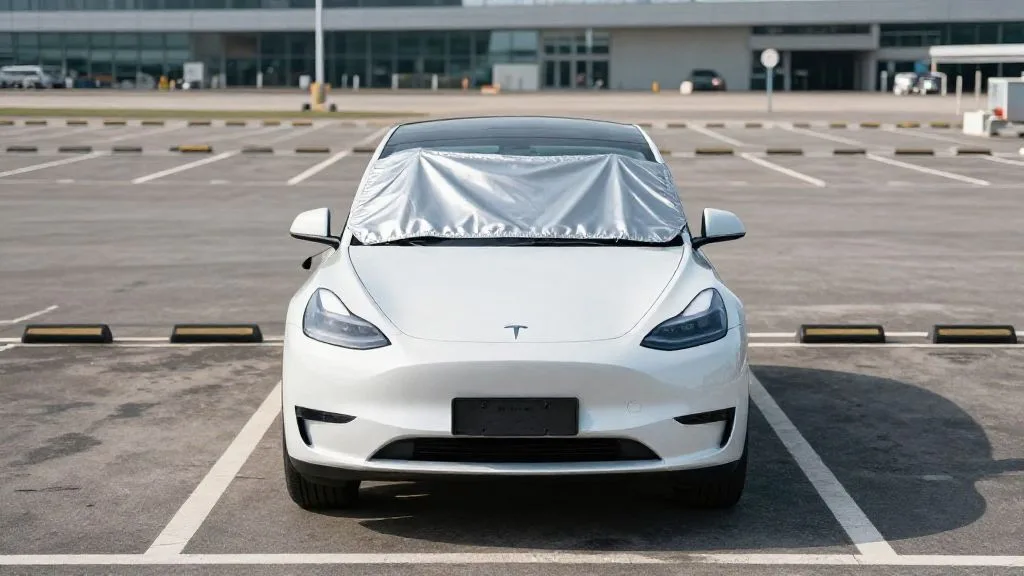
Trade-off: you will not depart at full range the moment you return. The payoff is longer pack life. If the forecast is unusually cold - below 20 F - setting 55 to 60% is fine to cover extra losses from cold-soaked cells. For scorching outdoor lots, 45 to 50% plus a sunshade works well because high heat and high SOC together are the worst pair.
Disable Sentry Mode and background features to stop vampire drain
Security and always-on features sip power nonstop. On a Tesla, Sentry Mode can draw roughly 150 to 250 watts while active. That is about 3.6 to 6 kWh per day - up to 60 kWh over 10 days - which can be a double-digit percent of your battery. Similar camera guard systems, like Rivian Gear Guard, also keep the car awake and consuming energy.
Before you lock up, turn off Sentry or Gear Guard, and allow the vehicle to sleep. On a Tesla: Controls - Safety - Sentry Mode - Off. Also turn off Cabin Overheat Protection unless the car will sit in extreme heat; use Fan Only if you must. Resist the urge to repeatedly open the app, because frequent wakes prevent deep sleep and add extra drain.
Limitation: disabling these features slightly reduces anti-tamper visibility. Airport lots generally have their own cameras and patrols, so the energy savings outweigh the marginal security benefit for a 10 day stay. If you want a compromise, enable Sentry only for specific locations, not for public lots, or use a dashcam that records when driving only.
Inflate tires +3 psi to counter sitting loss and temperature swings
Tires bleed pressure through rubber over time, and pressure drops about 1 psi for every 10 F temperature decrease. A car parked at an airport can see a 10 to 30 F swing between day and night. Adding +3 psi above the door-jamb label offsets natural seepage and cooling, helps prevent flat-spot thumps, and preserves efficiency on your return drive.
Do not exceed the sidewall maximum. The door label is your baseline - add 3 psi to that number, not to the sidewall figure. Expect a slightly firmer ride and a hair smaller contact patch on the way to the airport, which is acceptable for a short trip at normal speeds. When you get back, set pressures back to the door label once tires are cold.
Preflight checklist for a smooth 10 day park
Spend five minutes in the driveway so you are not troubleshooting at the terminal curb. The sequence below works well for Tesla, Rivian, Nissan Leaf, Hyundai Ioniq 5, and similar EVs. Brand names differ, but the ideas are the same.
- Charge or discharge to 50% SOC. Verify on the screen, not just the app.
- Set the charge limit to 50% so preconditioning or stray wakes do not push it higher via scheduled charging later.
- Disable Sentry Mode or Gear Guard. Turn off motion-triggered recording features.
- Set Cabin Overheat Protection to Off, or Fan Only if the car will sit in direct sun above 95 F.
- Inflate all four tires to door label +3 psi while cold. Check the spare if equipped.
- Turn off scheduled departure or climate. Make sure preconditioning will not run every morning.
- Lock the car and wait 2 to 3 minutes to confirm it sleeps. Interior screens should go dark and fans quiet.
- Bring the mobile key card as a backup, especially if airport shuttles interfere with your phone key.
- Optional: snap a quick photo of the odometer and SOC before you walk away.
What range loss to expect over 10 days and how to return smart
With Sentry off and the car sleeping properly, typical idle loss ranges around 0.3 to 1.0% per day. Over 10 days, that is roughly 3 to 10% for cars like a Tesla Model 3 or Hyundai Kona Electric. In very cold outdoor lots, plan for the high end, possibly 12 to 15% if temperatures dip and the pack never warms.
Before boarding the return shuttle, check SOC in the app. If your car allows remote preconditioning, 10 to 15 minutes is enough to warm the cabin without burning too much energy. Expect reduced regen on the first miles if the pack is cold - the yellow dotted line on Tesla or limited regen message on Nissan Leaf is normal. Once home, set tires back to the door label pressure while cold, then recharge to your daily limit.
If your airport has public Level 2 charging at long-term lots, resist leaving the car plugged in for 10 days. A loose connector, unexpected fees, or a tripped breaker can cause more hassle than benefit. For a short top-up on arrival or before departure, it is useful; as a babysitter for a week and a half, it is overkill.
FAQ
Should LFP batteries be stored closer to 60% instead of 50%?
LFP chemistry is tolerant of higher SOC, but for a 10 day sit there is no practical advantage to pushing higher. Aim for 50 to 60%. The main gains from higher storage SOC show up if you need immediate full power in freezing conditions, which an airport return rarely requires.
How much energy does Sentry Mode typically use in a day?
On Tesla vehicles, keeping Sentry active can use roughly 3.6 to 6 kWh per 24 hours, depending on activity and temperature. Over 10 days, that can exceed 30 kWh, which is a big bite out of a mid-size pack. Disabling it is the single strongest move to preserve SOC.
Is +3 psi safe for highway driving to the airport?
Yes, as long as you remain below the tire's sidewall maximum and only add +3 psi over the vehicle's door label. Expect a slightly firmer ride. Reset to the door label pressure when you return and the tires are cold.
What if I cannot reach exactly 50% before I park?
Close is fine. Anywhere between 40 and 60% hits the goal of mid-pack, low-voltage storage. If you arrive a bit high, you can run the cabin fan on high for several minutes in the lot to burn a percent or two before locking up.
Will checking the app every day drain the battery?
Each wake-up brings systems online for a few minutes and uses energy. Checked once, it is minor. Checked repeatedly over 10 days, it can add a noticeable couple of percent. Peek once mid-trip, then let it sleep.
A quick closing tip
Park in shade if you can, leave a sunshade up front, and crack nothing. The simple trio - 50% SOC, Sentry off, +3 psi - does the quiet work while you fly.